

St Petersburg Motorcycle Accident Lawyer
A rider crossing downtown, U.S. 19, I-275, or a bridge approach can encounter very different lane and visibility conditions. The page does not choose one explanation; it shows how to preserve the motorcycle record and identify who holds each St. Petersburg source.
Service area onlyFinnjury serves qualifying matters in St. Petersburg. This page describes an area served and is not an office listing. Finnjury's principal office is in Fort Lauderdale, Florida.
The case and local context
Motorcycle evidence requires attention to the rider's position, equipment, machine, road surface, and visibility in addition to ordinary vehicle records. St. Petersburg context matters when it leads to the correct segment, agency, bridge body, property, or camera holder; it does not prove how the collision happened.
The police-record and statewide portal links are bounded administrative sources. Neither verifies an individual narrative or predicts an outcome. This is general information and creates no attorney-client relationship; representation requires a signed agreement after the facts, law, conflicts, and evidence are reviewed.
Local orientation
St. Petersburg, FL
The incident address can determine which agencies may hold reports, video, dispatch records, roadway data, or other time-sensitive evidence. Use the map for geographic context, then begin with the specific location where the incident happened.
Pinellas County
The local setting and incident context
Local perspective
Name the street, ramp, intersection, bridge approach, travel direction, lane, time, weather, lighting, rider movement, other vehicle movement, responder, and final motorcycle location. If the event is described by a nearby landmark, replace that description with the actual contact point before requesting any record.
Keep the motorcycle available before repair, release, salvage, or disposal decisions change it. Photograph each side, controls, lights, tires, wheels, brakes, damage, detached parts, and transferred material. Preserve the helmet, jacket, gloves, footwear, mounted devices, tow papers, and original photo or video files with a custody log.
Build a visibility chronology using both approaches. Record the rider's lane position, headlamp and clothing information when documented, the driver's mirrors and vehicle pillars, turning or lane-change path, sight obstructions, traffic control, and the time each person could have become observable. Do not substitute a stereotype for measurements and recordings.
Local crash and risk context
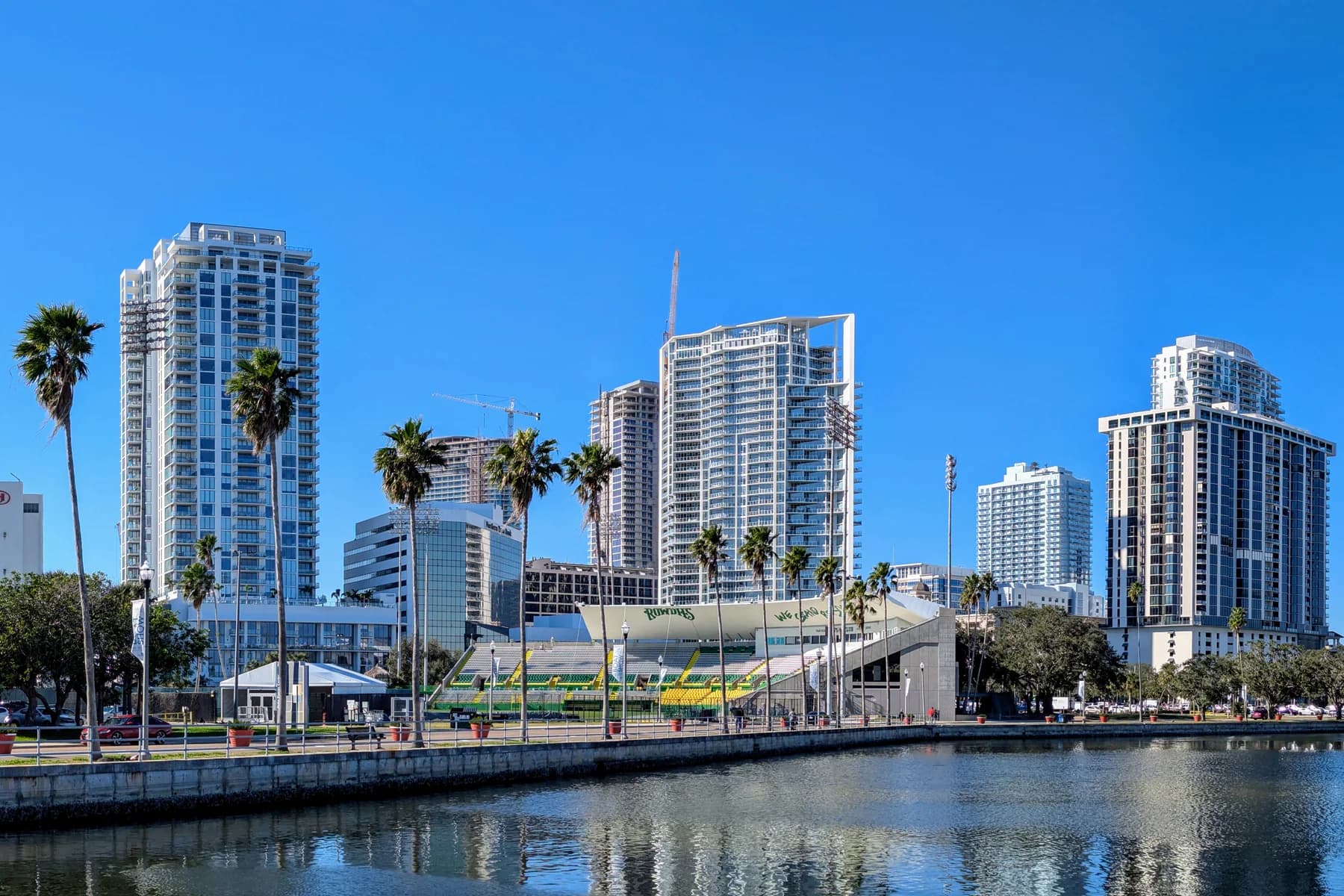
St. Petersburg combines a compact downtown grid, waterfront streets, bridge traffic, beach-bound travel, construction, and broad north-south corridors. Those features help define possible evidence sources but establish no cause. Confirm the conditions at the event time through scene material, witnesses, agency records, and original media.
A surface, lane seam, merge, turn, opening door, stopped queue, or another driver's movement can create a specific investigation question. Identify the exact feature and the proof supporting it. Current photographs should be dated and compared with the event record before anyone assumes the road remained unchanged.
Evidence, care, and recovery records
Roads and intersections
From a safe and lawful place, document the rider's approach, contact point, lane width, markings, surface, drainage, lighting, signs, signals, parking, landscaping, construction, and camera directions. Include a scale or stated measurement method when dimensions matter, and identify any later repair or configuration change.
If the account involves a lane change or turn, compare vehicle and motorcycle damage with the asserted paths. If it involves a roadway feature, preserve the specific surface area and its location. If visibility is disputed, fix observation distances and timestamps. Each theory needs its own physical test.
Care and recovery records
Medical professionals make treatment decisions. The evidence chronology should record symptoms, mobility, work, sleep, transportation, riding ability, appointments, restrictions, and supporting records without selecting a St. Petersburg provider. Later improvement or worsening should be dated rather than compressed into one summary.
The state and local legal path
Courts and public resources
The St. Petersburg Police Department Police Records Division is the verified route for identifying release procedures for a documented city police or crash record. It does not hold every Pinellas or state file, and a released report does not prove fault, cause, completeness, or damages.
The Florida Crash Portal is the verified statewide purchase path for an available official traffic crash report. Confirm the date, investigating agency, and report number. Availability, eligibility, and confidentiality periods are event-specific, and a portal purchase does not replace supplements, photographs, body or dash camera, roadway material, or private video.
Maintain separate request rows for the base report, supplements, scene media, traffic-control records, construction or maintenance leads, business or residential cameras, motorcycle evidence, other-vehicle material, witnesses, device files, and treatment records. Close a row only when the assigned source has actually answered it.
State-specific guidance
Separate a collision inside St. Petersburg from unincorporated Pinellas County, another municipality, a state-controlled I-275 or bridge facility, a private property, or a transit-related site. The responding officer's agency may not own the road or control traffic, construction, or private surveillance.
Florida law, insurance, and deadline discussion belongs in the statewide guide; general motorcycle responsibility and recovery belong in the practice overview. This local page instead identifies the St. Petersburg scene, report custodian, and private preservation routes without making a legal conclusion from the city name.
Fit and the Finnjury approach
Is this the right fit?
A review should test whether a lane movement, turn, surface, or visibility dispute is supported by the motorcycle, vehicle, mapped site, witnesses, and available recordings. Sort confirmed facts, contradictions, and still-obtainable evidence. Rider status alone neither establishes nor defeats responsibility.
Drivers, owners, employers, roadway controllers, contractors, manufacturers, and insurers require a documented role before inclusion. Treatment, insurance, collectability, conflicts, timing, forum, and Finnjury's ability to improve the matter remain separate acceptance questions.
The Finnjury approach
The rider deserves an investigation built from physical proof rather than assumptions. In St. Petersburg, the useful local work is to fix the exact peninsula or bridge route, preserve the machine and gear, and compare the driver's account with sight lines, damage, and time-matched recordings.
Helpful reading
Florida guidance connected to this matter
- 01
 ArticleFlorida Motorcycle Laws: What Riders Should KnowA source-backed guide to Florida motorcycle laws covering endorsements, helmets, eye protection, lane use, passengers, equipment, and insurance questions.
 - 02
 ArticleFlorida Motorcycle Insurance RequirementsFlorida motorcycle insurance requirements are not one simple rule. Separate registration, financial responsibility, helmet benefits, and policy coverage.
A direct first step in St. Petersburg
Tell us what happened
Share the essentials about the motorcycle accidents matter. Finnjury will review the context and follow up.