

Florida motorcycle laws are spread across several statutes
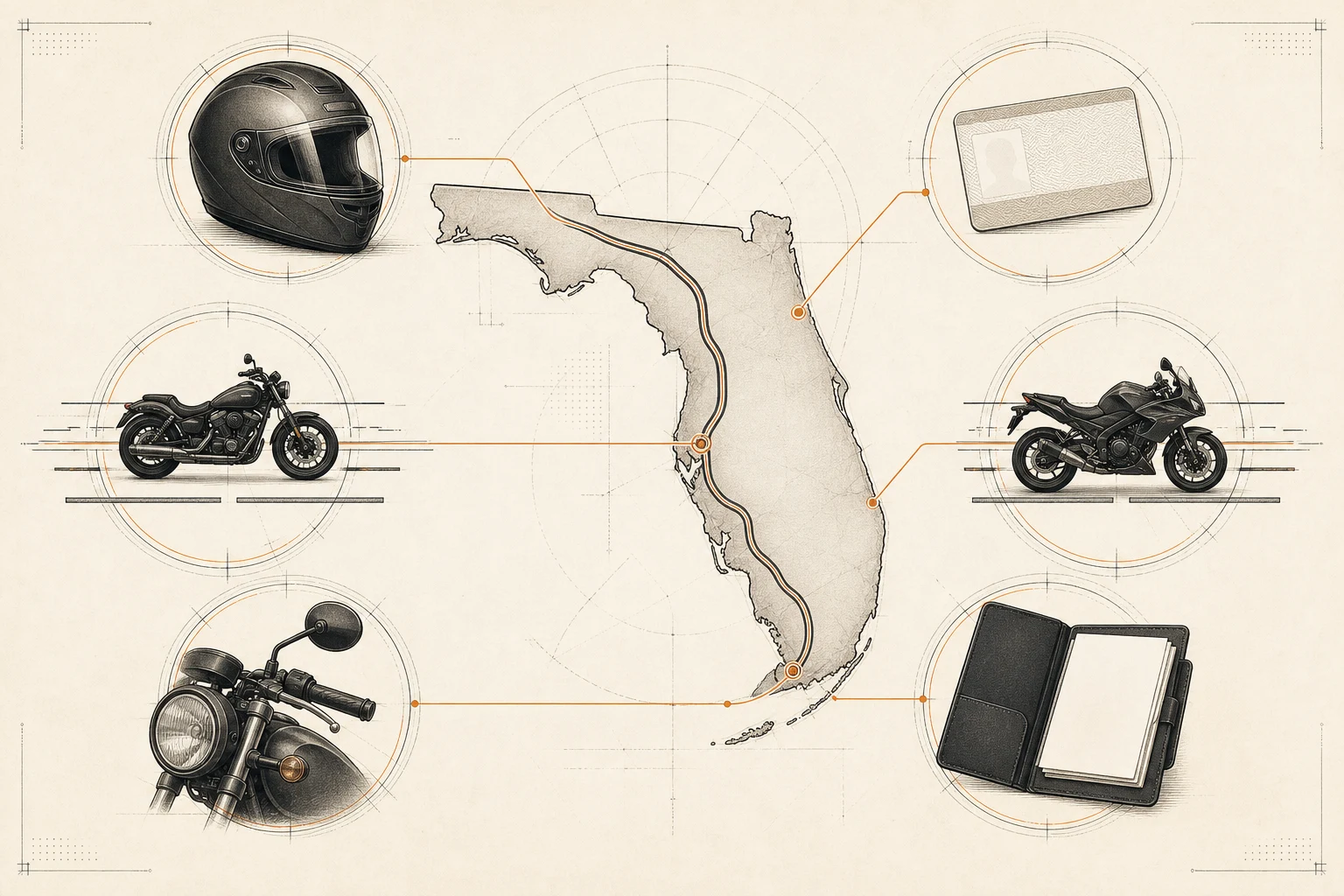
Florida's motorcycle rules are not contained in one checklist. Sections 316.2085, 316.209, 316.2095, and 316.211 address different parts of riding, lane use, passengers, and protective equipment, while section 322.12 addresses motorcycle licensing examinations.
This guide uses the official Florida Statutes cited below. The law in effect on the ride date and the facts of the event still need to be checked before drawing a conclusion.
Motorcycle authorization and first-time applicants
Florida Statutes section 322.12(5) provides for a separate motorcycle examination and directs the department to indicate motorcycle authorization on the license of a person who completes it. The same subsection requires a first-time applicant for motorcycle licensure to provide proof of completing the safety course referenced in section 322.0255.
Preserve the actual license, restriction, endorsement or authorization, course record, and effective dates. Those records address authorization to operate; they do not by themselves establish who caused a collision.
Helmet and eye-protection conditions are different
Section 316.211 generally addresses protective headgear for a person operating or riding on a motorcycle. It separately requires an operator to wear an approved eye-protective device and states limited exceptions, including the headgear condition for a person over 21 who has the medical-benefit coverage described in subsection (3)(b).
Do not combine the headgear and eye-protection rules into one age-based statement. Record the operator's and passenger's ages, which equipment each person used, and any policy relied on for the statutory medical-benefit condition. The focused Florida helmet guide covers that narrower analysis.
Passenger seating, footrests, and riding position
Section 316.2085 permits a passenger only when the motorcycle is designed to carry more than one person and the passenger uses the permanent seat designed for two or another firmly attached rear or side seat. It also addresses riding position, carrying an item that prevents both hands from remaining on the handlebars, and a passenger position that interferes with control or the operator's view.
Section 316.2095 separately requires passenger footrests, other than for a passenger in a sidecar or enclosed cab, and limits handlebars or handgrips above the seated operator's shoulders. Photographs of the motorcycle before repair can preserve these details.
Full-lane use does not authorize lane splitting
Section 316.209 gives motorcycles full use of a lane and recognizes two motorcycles riding abreast. It also prohibits overtaking and passing in the same lane occupied by the vehicle being passed, operating between traffic lanes or adjacent rows of vehicles, and operating more than two motorcycles abreast, subject to the statute's official-duty exception.
For a disputed lane movement, preserve the number and width of lanes, markings, traffic positions, direction of travel, intersection geometry, photographs, video, and witness accounts. The statutory label should be tied to the actual road configuration rather than inferred from a single description.
The helmet-coverage condition is not a complete insurance analysis
The medical-benefit language in section 316.211 answers a condition within the helmet statute. It does not, by itself, inventory every policy, registration rule, financial-responsibility question, or claim benefit that may matter after a Florida crash.
Keep the declarations pages and endorsements for the motorcycle, household vehicles, and any other potentially connected policy. Use the focused Florida motorcycle-insurance guide for that separate review.
Florida motorcycle-law evidence checklist
Match each legal question to the record that can answer it and to the statute in effect on the relevant date.
License, motorcycle authorization, course record, and effective dates
Operator and passenger ages and the equipment each person used
Helmet labels, eye protection, photographs, and condition after the crash
Seat design, passenger footrests, handlebars, and motorcycle photographs
Lane markings, vehicle positions, video, witnesses, and road geometry
All potentially connected insurance policies and coverage records
Common questions about Florida motorcycle laws
May motorcycles ride two abreast in Florida?
Section 316.209 allows two motorcycles abreast in one lane but prohibits operating more than two abreast. The exception does not authorize passing another vehicle in its occupied lane or operating between lanes of traffic.
Does Florida's over-21 helmet provision remove the eye-protection rule?
Section 316.211 states the operator eye-protection requirement separately from the limited headgear exception. The actual device and any applicable exception should be checked against the current statute.
Does an endorsement issue decide crash responsibility?
No. Licensing status and the collision sequence are different questions. Preserve the authorization record, but separately analyze each road user's movement, the applicable traffic rule, and the physical and electronic evidence.