

St Petersburg Premises Liability Lawyer
A property can change immediately after an incident. Photographs, video, inspection history, work orders, contracts, and witness knowledge should be organized around one St. Petersburg site before a repaired condition or business name becomes a substitute for proof.
Service area onlyFinnjury serves qualifying matters in St. Petersburg. This page describes an area served and is not an office listing. Finnjury's principal office is in Fort Lauderdale, Florida.
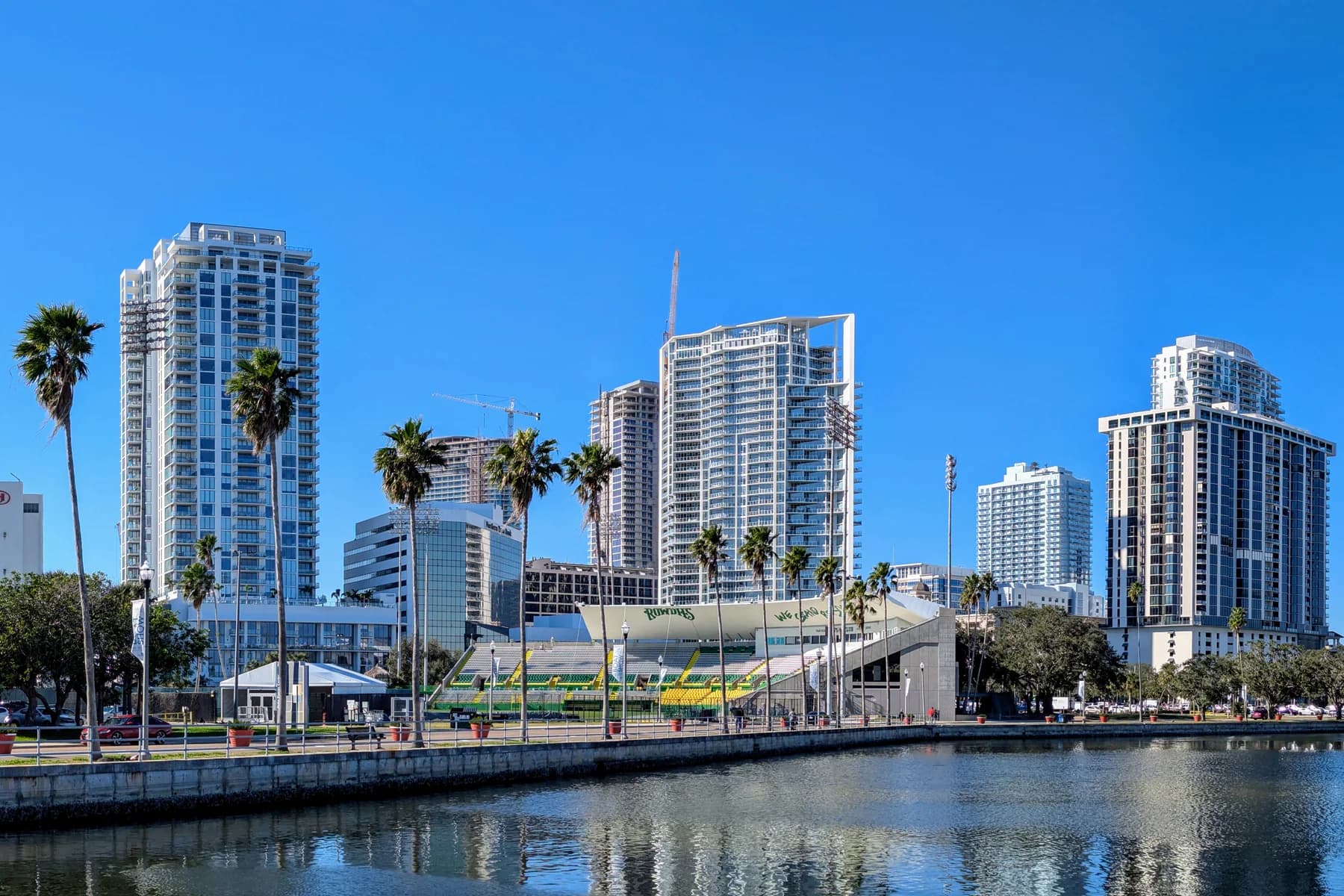
The case and local context
A premises file should preserve the condition before it changes and distinguish title ownership from daily control. City permit research can identify leads, while contracts, private systems, witnesses, and authorized records may answer operation and notice questions that a public entry cannot.
Neither a permit record nor a statewide court map proves responsibility, venue, or case value. This guide is general information and creates no representation. The property facts, governing law, evidence, conflicts, and potential engagement require individual review and a signed agreement.
Local orientation
St. Petersburg, FL
The incident address can determine which agencies may hold reports, video, dispatch records, roadway data, or other time-sensitive evidence. Use the map for geographic context, then begin with the specific location where the incident happened.
Pinellas County
The property and local setting
Local perspective
Record the complete address, unit or business, exact interior or exterior area, approach, time, lighting, weather if relevant, condition alleged, warning, footwear, witnesses, responder, and first person notified. A stair tread, doorway, dock, walkway, aisle, parking space, or floor transition is more useful than a broad property label.
Preserve original wide and close photographs, video, clothing and footwear, incident paperwork, witness contacts, and communications. If a measurement is safe and lawful, document the method and location. Do not rely on an enlarged or cropped image without retaining the full file and capture information.
Identify the possible video and maintenance custodians before sending requests. Surveillance, inspection logs, cleaning records, work orders, complaints, vendor files, and later repair information may reside with different owners, tenants, associations, managers, contractors, or systems. Request only a defined place, time, and record category.
Property and local context
St. Petersburg property incidents can arise in apartments, condominiums, hotels, restaurants, stores, marinas, parking areas, entertainment venues, public buildings, or construction zones. A sign or web listing does not establish who possessed, inspected, maintained, or changed the precise area.
Build a condition chronology separate from the medical chronology. The first should show inspections, reports, cleaning, repairs, work, and warnings around the event. The second should show the incident, initial care, symptoms, restrictions, and recovery. Injury severity cannot fill a gap in proof about the condition.
Property evidence and recovery records
Property and site evidence
For an outdoor event, document drainage, slope, elevation change, lighting, striping, landscaping, construction, traffic interaction, and camera views. Indoors, map the aisle, doorway, stair, threshold, floor surface, mat, railing, display, warning, and light source. Include only features tied to the actual account.
Record later changes with their source and date. A replaced light, repaired surface, moved display, cleaned spill, new warning, or resurfaced area may explain differences in current photographs; it is not automatically proof of a prior condition, notice, or admission.
Care and recovery records
Treating professionals decide care. The evidence record may document appointments, symptoms, mobility, work, household tasks, assistance, and rehabilitation without selecting a provider. A St. Petersburg facility's location does not make it preferred or establish that treatment relates legally to the property event.
The state and local legal path
Courts and public resources
St. Petersburg Construction Services and Permitting is the verified city starting point for an identified permit, inspection, or property-record lead tied to the exact address. A permit entry does not prove ownership, possession, operational control, notice, breach, cause, or liability.
Florida Courts' Trial Courts - Circuit page verifies the statewide circuit structure before county-specific court research. The map does not decide venue, jurisdiction, filing status, case viability, or whether a Pinellas court possesses a record connected with this site.
Use separate source rows for property and permit research, lease or association material, occupancy and management, inspection and maintenance, vendor agreements, surveillance, incident reports, witnesses, insurance, and any court file. List the holder, date range, access basis, response, and unresolved role for each.
State-specific guidance
Determine whether the site is private property, condominium common area, rental space, city facility, public sidewalk, marina, transit-related property, or another governmental location. Parcel ownership may begin research but does not answer possession, operational control, maintenance duty, or notice.
Florida premises law, procedure, and deadlines belong in the statewide and practice guides. This page focuses on St. Petersburg source custody: preserving the condition, identifying the responsible organizations, and checking permit or court leads without presenting them as findings of fault.
Fit and the Finnjury approach
Is this the right fit?
A responsible review tests whether a defined condition, documented injury, controllable area, and evidence of creation or notice can be investigated. It should consider use of the space, warnings, alternative explanations, timing, video, and records without converting an unfortunate result into proof of unsafe property.
Owners, tenants, associations, managers, businesses, vendors, contractors, public bodies, and insurers require distinct factual roles. Coverage, collectability, conflicts, forum, timing, treatment, and Finnjury's ability to improve the matter remain separate acceptance questions.
The Finnjury approach
Property cases reward specificity. For a St. Petersburg incident, the useful work is one mapped condition, one preservation request, and one role chart showing which organization possessed, inspected, maintained, or changed the precise area instead of accusing every name associated with the address.
A direct first step in St. Petersburg
Tell us what happened
Share the essentials about the premises liability matter. Finnjury will review the context and follow up.