
What to do immediately after a motorcycle accident
Start with safety. Call 911 when emergency help is needed, follow the instructions of dispatchers and medical responders, and do not put yourself in moving traffic to photograph or recover an item. People come before proof.
A motorcycle crash can involve a head or body injury even when every symptom is not obvious at the scene. Seek appropriate medical care and use current public-health guidance for symptoms or danger signs. This article cannot diagnose an injury.
Report the crash and identify the basic record
Crash-reporting duties and response practices vary by state and by what happened. When law enforcement responds, record the agency, report number, officer information, and instructions for obtaining the report.
Exchange the identifying and insurance information that applies to the event. If a rider is transported before this can happen, a report, passenger, witness, family member, or later investigation may help identify missing information.
The responding agency and report number
The other drivers, vehicles, license plates, and insurance information
Names and contact details for passengers and witnesses
Tow yard, repair facility, and motorcycle location
Document the scene before it changes
When it is safe, photographs or video can capture vehicle positions, lane markings, traffic controls, sight lines, debris, skid or scrape marks, lighting, weather, construction, and nearby cameras. Wide views explain the setting while close views preserve details.
Write down the direction each person was traveling and the sequence you remember. A short note made close in time to the crash may be more useful than trying to rebuild every detail weeks later.
Wide photographs showing the whole road and approach
Close photographs showing damage, marks, debris, and injuries
Nearby businesses, doorbell cameras, traffic cameras, or dash cameras
Witness contact information and what each person observed
Protect the motorcycle, helmet, and riding gear
The motorcycle and the objects involved can show points of contact, direction of force, mechanical condition, and the severity of the event. Before repairs, disposal, or transfer, make sure their condition is documented and ask whether inspection may be needed.
Keep the helmet, jacket, gloves, boots, damaged phone, luggage, and other gear in their post-crash condition when practical. Do not clean or alter an item that may help explain what happened.
Get medical care and build a recovery timeline
Save discharge instructions, appointment summaries, imaging information, prescriptions, bills, and work restrictions. Keep a simple timeline of symptoms, treatment, missed work, transportation needs, and changes in daily activity.
The goal is not to write a legal argument. It is to make the real course of treatment and recovery easier to understand from reliable records.
Save digital, insurance, and expense records
Navigation history, ride-tracking data, photographs, messages, dash-camera files, and vehicle data may be overwritten or lost. Save original files when possible and avoid editing the only copy.
Keep claim numbers, policies, letters, emails, estimates, towing and storage records, medical bills, travel costs, wage information, and other documents connected to the crash. Before signing an authorization or giving a recorded statement you do not understand, ask what is being requested and why.
What not to do after a motorcycle accident
Do not guess about speed, distance, injury severity, or fault when you do not know. Do not alter the only copy of a photograph or video, dispose of damaged gear, authorize major repairs without documenting the motorcycle, or assume a social-media post is private.
Do not treat a general online checklist as a substitute for current medical guidance, the reporting rules that apply where the crash occurred, or advice based on the specific facts.
Motorcycle accident checklist
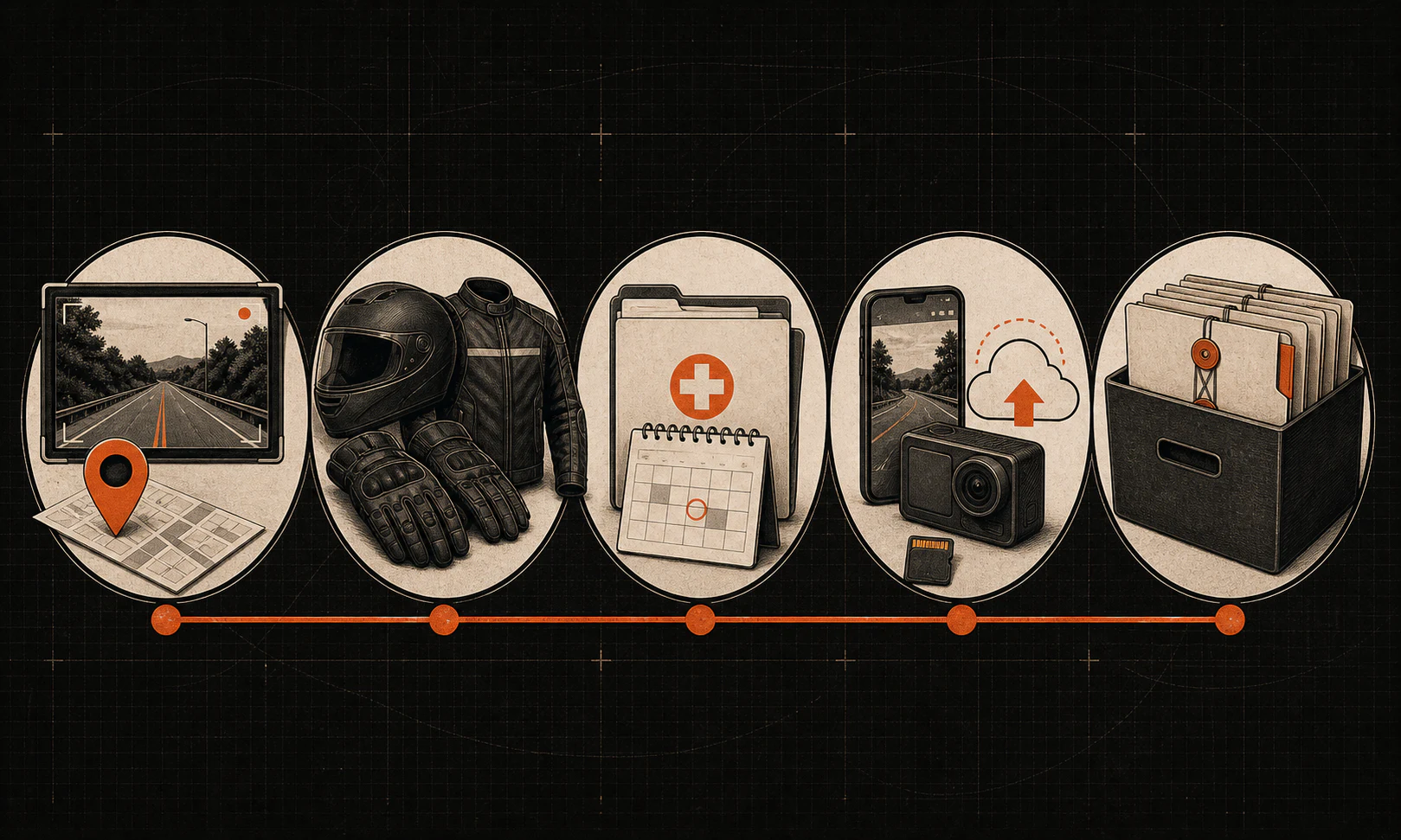
The useful sequence is simple: protect people, create the basic report, preserve the changing scene, locate the motorcycle and gear, follow through with medical care, and keep the original records together.
If you could not complete a step at the scene, that does not make the step impossible. Identify what is missing, who may have it, and whether the information could be overwritten, repaired, discarded, or lost with time.
Emergency help and appropriate medical care
Agency, report, driver, vehicle, witness, and insurance information
Scene photographs, video, camera locations, and contemporaneous notes
Motorcycle, helmet, riding gear, phone, and other physical items
Medical, work, expense, digital, towing, repair, and insurance records