


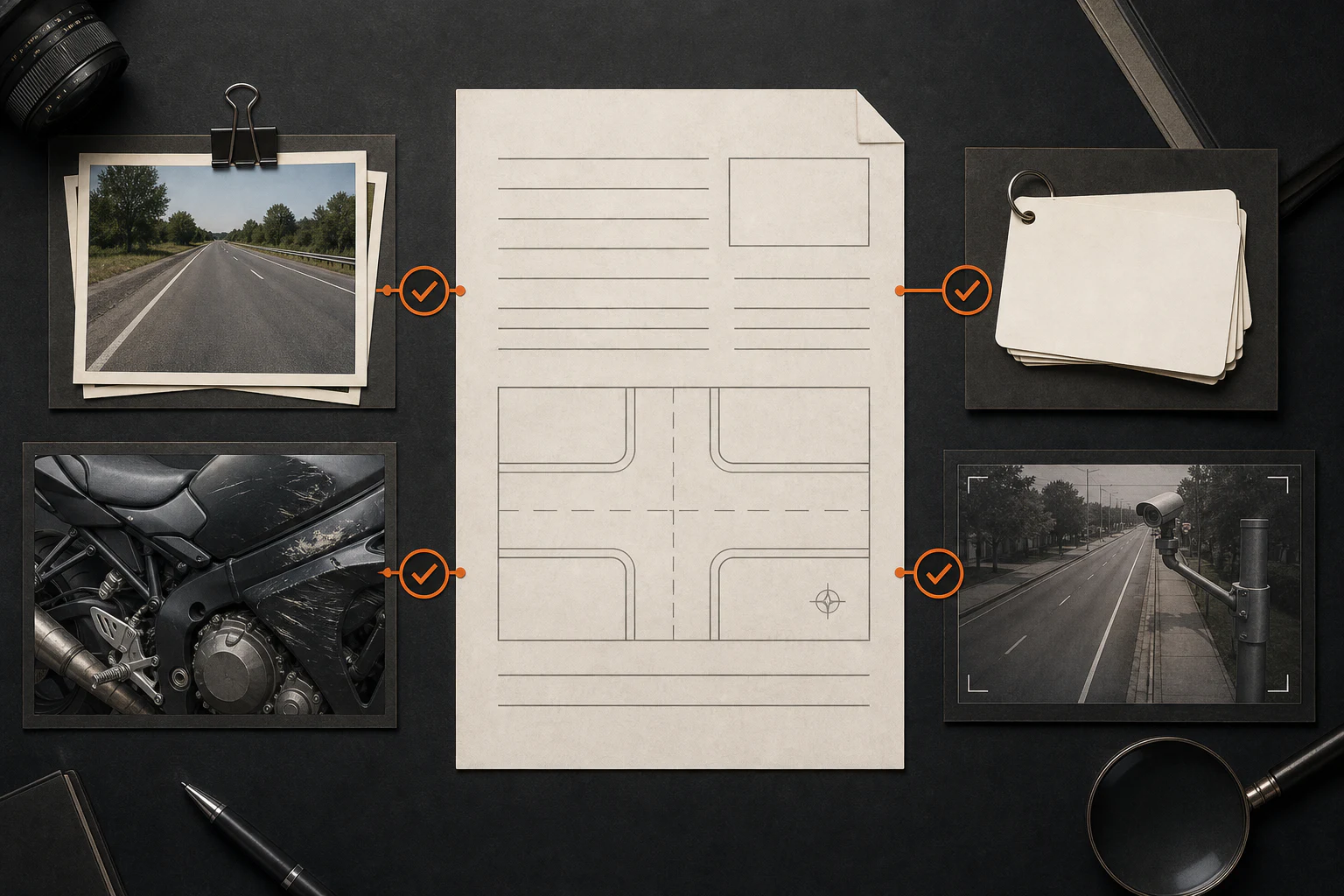
First identify which crash document is wrong
The phrase crash report can refer to a police-created report, a driver or motorist report filed with a state agency, or an exchange-of-information sheet. Those documents are created by different people and do not necessarily use the same correction process.
Obtain the complete official copy before requesting a change. Record the reporting agency, report or case number, crash date, form name, page count, and the date or version shown on the copy. An insurer's summary or an incomplete portal preview is not a substitute for the report itself.
Describe the exact field, fact, or passage at issue
Separate a verifiable data error from a disagreement with a narrative, diagram, contributing factor, citation, or opinion. Use the page, section, box, or sentence to identify the issue and state the requested replacement accurately.
The reporting agency decides whether its rules permit a correction, supplement, attachment, or no change. A specific request supported by an original record is more useful than a demand that the entire report be rewritten.
Current entry and requested replacement
Page, section, box, diagram, or narrative sentence
Report number and reporting-agency name
Document or original file supporting the request
Date submitted and the agency's written response
Build a correction packet without changing the evidence
Keep the report as received and preserve original photographs, video, witness contact information, vehicle records, medical-transport records, and electronic data. Make annotations on a working copy instead of writing over the only copy of a report or image.
A useful request packet pairs each proposed change with its support. Examples can include a driver license for a misspelled name, registration or insurance records for vehicle data, timestamped photographs for a location or signal detail, and an unedited recording for a disputed sequence.
Florida reports: confirm the agency and ask about an update or supplement
The FLHSMV Traffic Crash Report Manual contains an Update section for reporting personnel. Florida Highway Patrol Policy 13.01 separately states that corrections made after an approved FHP crash report has been exported are handled through a crash-report supplement.
That FHP policy applies to FHP reports, not automatically to a city police department or sheriff's office. Use the agency name on the report, contact that agency, and ask who accepts supporting material and whether its current process uses an update, supplement, or another record.
Michigan reports: contact the department named on the UD-10
Michigan State Police says its Traffic Crash Reporting Unit cannot make changes to a UD-10. Its current FAQ directs a person to the law-enforcement agency that reported the crash; that agency decides whether it will make a change and submit an update to MSP.
The reporting department appears at the top of the UD-10 under Department Name. Send the request to that department, retain proof of delivery, and ask how to obtain the updated version if the department submits one.
Track the response and preserve the larger record
Keep the original report, the correction request, all attachments, delivery confirmation, the agency response, and any corrected or supplemental copy. Do not describe a request as approved until the agency confirms what it changed or added.
A reporting-system record is not every piece of crash evidence and does not replace a separate review of physical, digital, witness, medical, and other records. The legal use or effect of a report can differ by jurisdiction and proceeding, so that question requires separate, fact-specific review.
Crash-report correction checklist
Act while original evidence and agency contact information are still available, but make a precise and documented request instead of guessing about the process.
Complete official report and every page or supplement
Reporting agency, report number, form name, and version date
Exact entry at issue and the requested replacement
Original supporting records and an annotated working copy
Agency instructions, submission receipt, response, and updated copy