


What to do immediately after a truck accident
Start with safety. Call 911 when emergency help is needed, follow the instructions of dispatchers and responders, and avoid standing in an active travel lane to take photographs or retrieve property.
Seek appropriate medical care. The size of a commercial vehicle does not reliably predict which symptoms will appear at the scene, and this guide cannot diagnose an injury.
Report the crash and identify the commercial vehicle
When law enforcement responds, record the agency, report number, officer information, and instructions for obtaining the report. Photograph identifying information only when it is safe and lawful to do so.
A tractor and trailer may display different numbers or ownership information. Capture the carrier name, United States Department of Transportation number, license plates, trailer number, insurance information, and any visible shipping or equipment identifiers.
Driver name and license information
Carrier name and USDOT number
Tractor, trailer, and license-plate numbers
Insurance and dispatch contact information
Tow locations for every involved vehicle
Document the scene and independent witnesses
If conditions allow, capture wide views of traffic lanes, vehicle positions, signs, signals, construction, lighting, weather, debris, marks, and sight lines. Close photographs can preserve damage, cargo, tires, lights, and identifying labels.
Ask witnesses for direct contact information. Also note nearby businesses, traffic cameras, dash cameras, and other possible recordings because some systems overwrite files quickly.
Preserve the truck, carrier, and trip records
A truck crash can involve a driver, carrier, contractor, trailer owner, shipper, broker, loader, maintenance provider, and other businesses. Identifying each role helps show where records may exist.
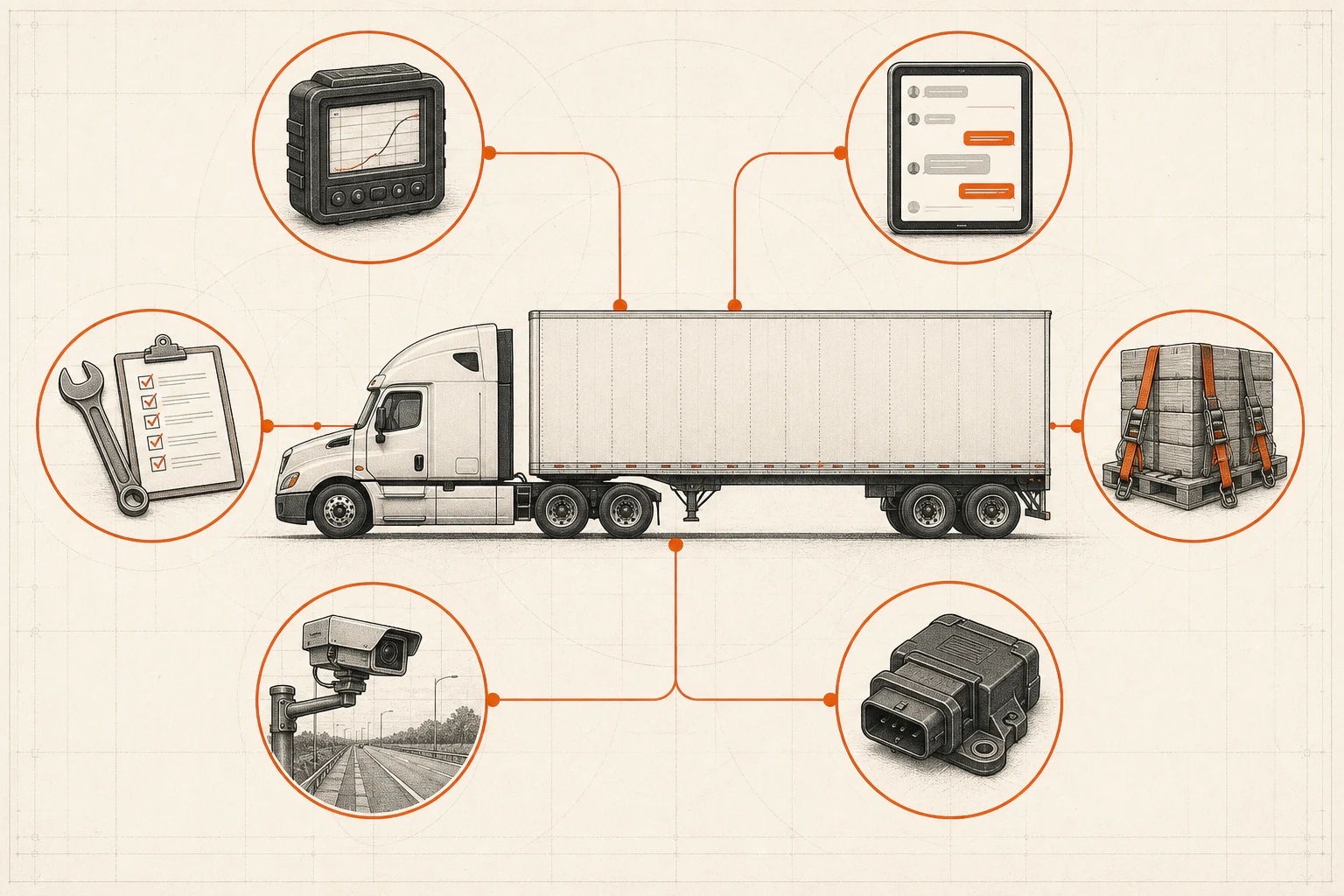
Possible records include electronic logs, dispatch communications, route and location data, toll and fuel records, onboard systems, driver qualification information, inspection reports, maintenance records, and company policies. The existence and retention of any record depends on the operation and facts.
Keep cargo, loading, and vehicle-condition evidence
Bills of lading, loading instructions, weight tickets, seal records, photographs, securement equipment, and communications with a shipper or loader may matter when cargo shifts, falls, or changes the way a vehicle handles.
Inspection reports, repair orders, brake and tire records, warning codes, and the physical condition of the tractor and trailer may also require review before repair, salvage, or return to service changes the evidence.
Build the medical, work, and expense record
Keep discharge instructions, appointment summaries, imaging information, prescriptions, bills, work restrictions, mileage, transportation costs, and a simple timeline of symptoms and daily limitations.
Save original insurance letters, claim numbers, estimates, towing and storage records, wage information, and communications. Before signing an authorization or giving a recorded statement you do not understand, ask what is being requested and why.
Common questions after a truck accident
What should I avoid doing after the crash?
Avoid guessing about speed, distance, injury severity, or fault. Do not edit the only copy of a photograph, dispose of damaged property, or assume a social-media post is private.
How soon should the insurance company be notified?
Policy notice terms and state rules can differ. Preserve the policy and claim information, provide accurate basic notice when required, and ask questions before agreeing to a statement or broad authorization you do not understand.
Why do commercial records require early attention?
Some electronic, camera, dispatch, and company systems retain information for limited periods. Early identification can reduce the chance that a useful record is routinely overwritten or a vehicle changes condition.
Does the police report decide who is responsible?
A report can be important without containing every witness, record, or later-developed fact. Responsibility may require comparing the report with physical evidence, electronic records, company information, and applicable rules.
Truck accident checklist
The practical sequence is to protect people, create the basic report, identify the commercial operation, preserve the changing scene, follow through with medical care, and organize original records.
Emergency help and appropriate medical care
Agency, report, driver, carrier, tractor, trailer, witness, and insurance information
Scene photographs, video, camera locations, and contemporaneous notes
Electronic logs, dispatch, maintenance, inspection, cargo, and route records
Medical, work, expense, towing, repair, and insurance records